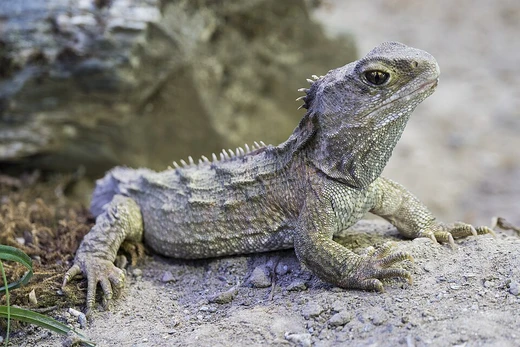
Heterodontosaurus
Small dinosaur with three types of teeth.

The genus name means 'different toothed lizard', in reference to its unusual, heterodont dentition. It is the eponymous and best-known member of the family Heterodontosauridae, which is considered a basal group within the order of ornithischian dinosaurs.
- length
- 1.18 m to possibly 1.75 m
- weight
- 2 to 10 kg
- diet
- Herbivorous or at least omnivorous
- locomotion
- Bipedal
- discovered_in
- South Africa
Lore & Background
The specimen consists of a crushed but nearly complete skull. Charig. The specific name honors George C. Tuck, a director of Austin Motor Company, who supported the expedition. This specimen included both the skull and skeleton, preserved in articulation. It is the most complete heterodontosaurid skeleton described to date. Norman and colleagues.
Reader's Guide
Heterodontosaurus is significant as the best-known member of the Heterodontosauridae family, providing key insights into early ornithischian dinosaur anatomy and evolution. Its discovery in the Early Jurassic of South Africa helped fill a gap in the fossil record of early ornithischians. The genus is notable for its heterodont dentition—incisor-like teeth, canine-like tusks, and chisel-like cheek teeth—which suggests a specialized diet, likely herbivorous or omnivorous. Despite its small size, Heterodontosaurus was one of the largest members of its family. Its bipedal locomotion, sporadic tooth replacement, and the presence of a horny beak add to its paleobiological interest.
Did You Know?
- Heterodontosaurus means 'different toothed lizard', referring to its three types of teeth.
- The holotype skull was damaged during preparation because a diamond saw was needed to remove a hard ferruginous layer.
- The specific name tucki honors G. C. Tuck, a director of Austin Motor Company who supported the discoverers.
Frequently Asked Questions
What is Heterodontosaurus?
Heterodontosaurus is a small, two-legged dinosaur from the Early Jurassic, known only from a single species called H. tucki. Its name translates to 'different-toothed lizard,' a nod to the three distinct tooth types found in its jaws.
What made Heterodontosaurus's teeth unusual?
Unlike most dinosaurs with uniform teeth, Heterodontosaurus had three visibly different kinds of teeth in its mouth, giving it a heterodont dentition. This mix of tooth shapes suggests it could handle a varied diet of plants and possibly small animals.
How big was Heterodontosaurus?
It was a compact animal, measuring roughly 1.18 meters in length, though some estimates push it up to about 1.75 meters. Its body mass likely fell somewhere between 2 and 10 kilograms, making it one of the smaller dinosaurs of its era.
Why does Heterodontosaurus matter in dinosaur taxonomy?
It serves as the type species for the family Heterodontosauridae, anchoring that group's identity. Because heterodontosaurids are regarded as a basal lineage within the ornithischian dinosaurs, Heterodontosaurus helps researchers understand the early branching of that entire clade.
More in Ancient Reptiles 25-40
Elsewhere in the Ancient Reptiles universe
Spotted an error? Know more?
This is a living reference — every entry is fact-audited, and reader corrections feed straight into our audit queue. Suggest an edit · See this site's audit record